




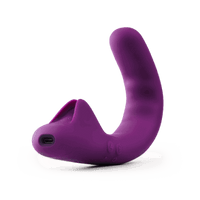




Here are some of the things that really should have come up in sex education!
1. What are the parts of the penis?
2. What is an erection?
3. What happens during ejaculation?
4. What is the difference between pre-cum and semen?
5. How important is a strong PC (Pubococcygeus) Muscle?
6. What is the refractory period?
7. What are the different types of male orgasm?
8. What’s the average penis size?
9. Why are some penises circumcised and some uncircumcised?
10. Can the penis break?
1. What are the parts of the penis?
The penis is made up of 7 main parts:
- Shaft - The main external length of the penis.
- Glans (head) - The rounded tip of the penis, which is highly innervated and sensitive.
- Foreskin - The fold of skin covering the glans in uncircumcised penises.
- Frenulum - A sensitive band of tissue connecting the foreskin to the underside of the glans.
- Urethra - The tube that carries urine and semen out of the body.
- Corpus spongiosum - Spongy erectile tissue that surrounds the urethra and helps keep it open during ejaculation.
- Two corpora cavernosa - Two columns of erectile tissue that fill with blood to create an erection.

The penis is also connected to several reproductive and urinary structures that support erections, ejaculation, fertility, and urination, including:
- Prostate - Produces fluid that helps nourish and transport sperm.
- Seminal vesicles - Create much of the fluid found in semen.
- Vas deferens - Tubes that carry sperm from the testicles.
- Bladder - Stores urine before it leaves the body through the urethra.
- Testicles - Produce sperm and testosterone.
- Pelvic floor muscles - Help support erections, ejaculation, and bladder control.
2. What is an erection?
An erection happens when the penis fills with blood and becomes firm. Sexual arousal is the most obvious trigger, but erections also happen spontaneously - including during sleep, which is completely normal and actually a sign of healthy sexual function.
When arousal kicks in, the brain sends signals through the nervous system to relax the smooth muscles inside the penis. That relaxation opens up blood flow into two sponge-like chambers called the corpora cavernosa, which run along the length of the shaft. As those chambers fill with blood, the penis stiffens and expands.
There are three types of erections:
- Reflexogenic - triggered by direct physical contact to the genitals
- Psychogenic - triggered by audiovisual stimulation or fantasy
- Nocturnal - occur naturally during REM sleep, typically 3-5 times per night
3. What happens during ejaculation?
The moment of ejaculation is primarily controlled by a spinal reflex center, not the brain directly - though the brain does play a supporting role.
It happens in two phases:
- Emission is the movement of semen into the urethra
- Expulsion is the release of semen out of the urethra
4. What is the difference between pre-cum and semen?
Pre-cum is the clear fluid that comes out of the penis before ejaculation. It's produced by the Cowper's Gland, also known as the Bulbourethral Gland - the male equivalent of the Bartholin Glands in women. Its two main jobs are lubrication and neutralizing the acidity left behind by urine in the urethra, which helps protect sperm during ejaculation.
Semen is a different fluid entirely. It's made up of roughly 70% seminal fluid, 20-30% prostate fluid, and less than 5% sperm. A typical ejaculation contains anywhere from 15 million to over 200 million sperm per milliliter - the range is wide and varies significantly from person to person.
Fun fact: Pre-cum travels through the same urethra as urine and semen, and can carry leftover sperm from a previous ejaculation - which means pregnancy is potentially possible from pre-cum.
5. How important is a strong PC (Pubococcygeus) muscle?
The PC muscle - or pubococcygeus muscle - is part of the pelvic floor, a group of muscles that runs from the pubic bone to the tailbone in both men and women. Its main job is supporting the pelvic organs and controlling bladder and bowel function. But for men, a strong pelvic floor does something else: it helps the penis fill with blood during an erection and hold it there.
Strengthening these muscles through male Kegel exercises has been shown to improve erection quality, help with premature ejaculation, and give you more control over when and how you climax.
To find the right muscles, try stopping your urine mid-flow - the muscles you use to do that are the ones you're after. You can also insert a finger into the anus and squeeze; you'll feel the muscles tighten around it. Once you've found them, the Kegels are straightforward: contract, hold for a few seconds, release. Repeat several times a day.
With enough practice, some men are able to separate orgasm from ejaculation entirely - reaching climax without ejaculating. Without ejaculation, the refractory period is significantly shorter, which makes multiple orgasms possible. It takes time and consistent practice, and it doesn't happen for everyone, but the pelvic floor control that makes it possible starts with the same basic Kegel exercises.
6. What is the refractory period?
After ejaculation, there's a window of time where the penis can't become erect again. This is the refractory period - the body's recovery time between orgasms. It varies widely from person to person, anywhere from a few minutes to a couple of days, and for some men it comes with a strong sensitivity to touch.
Research links it to a drop in dopamine after ejaculation - the neurotransmitter driving arousal and motivation - alongside a rise in serotonin that actively suppresses the urge to go again. It's the same mechanism behind why SSRIs - antidepressants that raise serotonin levels - commonly cause delayed ejaculation as a side effect.
Lower dopamine levels after orgasm are associated with a shorter refractory period. It's also why edging and orgasm denial may appeal to some men: staying in that pre-orgasmic state means staying in the pleasure without triggering the recovery period that follows.
7. What are the different types of male orgasm?
If you thought the only male orgasm was through penile stimulation, you may be surprised to learn male orgasms aren't limited to one type. There are actually many different types of male orgasm, and here are some examples:
- Ejaculatory orgasm is the most common - penile stimulation building to climax and ejaculation. But orgasm and ejaculation are two separate events that don't have to happen together.
- Non-ejaculatory orgasm, also known as a dry orgasm, is climax without semen release.
- Prostate orgasm is achieved by stimulating the P-spot, a walnut-sized gland found roughly 2 inches inside the anus on the front rectal wall. Pressing gently toward the front wall and massaging the prostate can produce sensation distinctly different from penile stimulation that culminates in a prostate orgasm.
- Perineum stimulation - pressure or vibration on the perineum, the area between the scrotum and anus, offers external access to the prostate without internal stimulation.
- Blended orgasm combines penile and prostate stimulation simultaneously for a more intense response than either alone.
- Nipple orgasm is possible for some men. Brain imaging research shows nipple stimulation activates the same region of the sensory cortex as genital stimulation - which explains why it can feel sexual and, in some cases, tip over into orgasm.
8. What’s the average penis size?
Big feet, big penis? Close enough to a myth. Studies have not established a connection between foot size and penis length.
As for averages: a large-scale review of over 15,000 men puts the average flaccid penis at around 3.6 inches, and the average erect penis at 5.16 inches. Most men - roughly 68% - fall between 4.4 and 5.8 inches when erect. A 6.3-inch erection puts you in the top 5%. These figures vary by region globally, though the differences are smaller than popular culture tends to suggest.
9. Why are some penises circumcised and some uncircumcised?
Circumcision is the surgical removal of the foreskin - the skin that covers the glans. Around 38% of men globally are circumcised, though rates and reasons vary significantly by region, religion, and culture. It's common in Muslim and Jewish communities, common in the US, and less common across most of Europe.
Reasons for circumcision include religious observance, cultural tradition, and health considerations. Whether circumcision affects sexual sensation is an area where research findings vary. Some studies find no measurable difference in sensitivity, while others report differences in how pleasure is experienced at the glans. Neither outcome is universal, and individual experience varies widely. Whether circumcised or not, neither is good or bad - just different.
10. Can the penis break?
Yes and no. The penis has no bones, so it can't break in the traditional way, but it can fracture.
The tissue that keeps it rigid during an erection can tear if enough pressure is applied at the wrong angle. This most commonly happens during sex - usually when re-entering and missing the mark. There's typically an audible pop, immediate loss of erection, and significant pain.
If this happens, get to a doctor straight away. It's a medical emergency and delays increase the risk of permanent damage.
Takeaway
The penis is more complex than most people give it credit for - from the neurochemistry behind orgasm to the mechanics of an erection. Every penis is different in size, shape, sensitivity, and response - and none of those differences make one better than another.
If you want to put some of what you've learned about penis anatomy to practice, an exciting place to start is how to use a vibrator on your penis.